

Offshore Engineering Jobs: Roles, Skills and Career Paths
Offshore engineering jobs underpin the energy, resources and marine industries of Australia and continue to attract skilled engineers from around the world. If you have ever wondered what these roles involve, what employers expect and how migration fits in, this guide explains it in simple terms. Career opportunities in the engineering sector exist in a range of environments including construction sites, manufacturing plants, energy plants and marine infrastructure. One specialized field which attracts various engineers from around the world is Offshore engineering jobs. Offshore engineering jobs involve designing, developing, operating and maintaining structures and equipment in marine environments, particularly in the energy and oil and gas industries.
The positions require a good technical background, the ability to solve problems and knowledge of workplace safety. Engineers could work on offshore platforms, drilling facilities, subsea systems, pipelines, marine vessels and renewable energy installations. Knowledge of this field can assist professionals seeking international projects or Australia’s expanding energy sector to identify appropriate career opportunities.
What Are Offshore Engineering Jobs?
Offshore engineering is the engineering that is done for projects that are situated in oceans, seas and other marine environments. These projects often call for complex structures and equipment that need to operate safely under difficult conditions such as high winds, waves, corrosion and varying water pressure.
Unlike traditional land-based engineering projects, offshore projects must take into account marine conditions, environmental protection, equipment reliability and specialized safety procedures.
Depending on their specialization, engineers may work in design offices, engineering consultancies, shipyards, offshore platforms or on project sites. Some positions require regular travel offshore, while others are based onshore and support offshore operations through planning, design and project management.
Offshore Engineering Jobs in Australia: Where to Find Opportunities
Australia has an established offshore oil and gas industry and is developing new opportunities in offshore renewable energy. Engineering professionals might find employment in Western Australia, Queensland, Victoria and other locations related to marine and energy infrastructure.
Perth is a key location for companies supporting offshore oil and gas, engineering services and subsea work. Job ads now feature openings for project engineers, mechanical engineers, inspection specialists and others involved in offshore construction and maintenance.
Engineers looking for offshore engineering jobs in Australia have a number of job search platforms and industry resources they can tap into:
- SEEK: Find jobs in engineering, offshore energy, oil and gas and marine.
- LinkedIn:Join engineering companies, recruitment companies and energy employers on Linkedin.
- Company career pages:Look for jobs posted directly by energy companies, offshore engineering contractors and consultancies.
- Industry bodies: Monitor developments and employment information from relevant energy and engineering industry bodies.
Don’t use one generic phrase in your searches. Use specific job titles. Overseas applicants should also verify that the employer is open to overseas applicants and whether the position requires work rights, sponsorship by the employer or specific industry certifications.

Why Offshore Engineering Careers in Australia Keep Growing
Australia’s coastline holds major oil, gas and emerging renewable projects, from the North West Shelf in Western Australia to Bass Strait in the south-east. Offshore engineering careers in Australia are also expanding through decommissioning work and offshore wind planning, so demand is no longer limited to hydrocarbons.
Companies need engineers who can design, maintain and safely retire complex structures at sea. For internationally trained engineers, this creates real opportunity, especially in specialties where local shortages exist.
Offshore Oil and Gas Engineering Jobs: Key Roles and Responsibilities
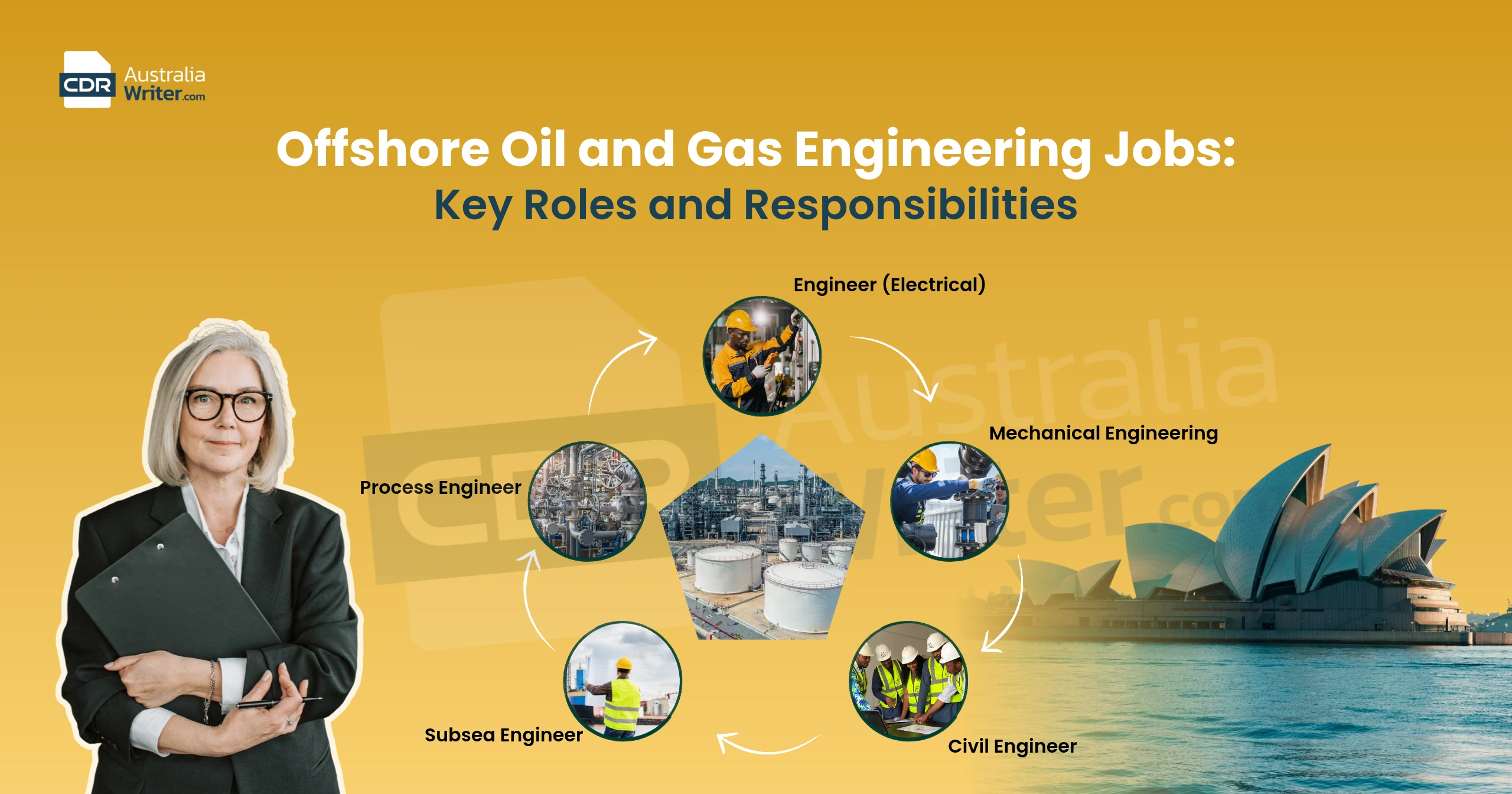
Oil and gas remains an important part of the Offshore engineering career industry. Projects involve exploration, drilling, production, transportation and maintenance of offshore facilities. These activities require professionals from several engineering disciplines.
Common roles include:
1. Mechanical Engineering
Mechanical engineers are responsible for the machinery, pumps, compressors, turbines and other mechanical systems which are found in offshore facilities. They also help to make sure the equipment operates safely and efficiently.
2. Civil Engineer
Structural engineers design and assess offshore platforms, support structures and marine installations. All of these consider structural strength, wave loads, wind conditions and durability of materials.
3. Engineer (Electrical)
Power and distribution, electrical equipment and control systems are all areas that electrical engineers work in. They can help to ensure that offshore facilities are provided with a constant supply of power.
4. Process Engineer
Process engineers design and optimize the systems used to process oil and gas. Their focus is on operational efficiency, process safety and equipment performance.
5. Subsea Engineer
Subsea engineers deal with underwater equipment, pipelines, production systems and associated infrastructure. Their responsibilities may include system design, installation planning, inspection and maintenance.
If you are a professional seeking offshore oil and gas engineering jobs, you should be aware that the responsibilities will change with the project, employer and experience level. Some positions are office based majority of the time, and some have offshore site visits or rotational work arrangements.
Offshore Wind Engineering Careers: Opportunities in Renewable Energy
Offshore wind engineering is another area where the global energy industry needs to develop. These projects are about electricity generation from wind turbines installed in marine environments. “Offshore wind farms need engineers from a range of technical backgrounds to build and maintain them.
Careers in offshore wind engineering could involve:
- Civil and Structural Engineering: Design of foundations, support structures and port infrastructures.
- Mechanical Engineering: This consists of: Rotating Equipment and Mechanical Systems & Turbine Components.
- Electrical Engineering: Designing systems for power generation, transmission and distribution.
- Environmental Engineering: Evaluating environmental impacts and assisting in the sustainable design of projects.
- Project Engineering: Coordinate engineering activities, contractors, schedules and technical requirements.
Australia is also developing its offshore wind industry. Victoria’s government acknowledges engineering and technical opportunities across project planning, construction, installation, operations and maintenance. Its workforce planning estimates that offshore wind could require around 2,300 to 4,000 jobs at peak activity across Australia, with many of these opportunities expected to be in Victoria.
This may offer opportunities for engineers with relevant experience in energy, infrastructure, marine construction and electrical systems. But real hiring will depend on project approvals, investment and construction timelines.
Engineers looking for offshore wind engineering careers should therefore keep an eye on the industry and note any transferable skills from other engineering disciplines.
Offshore engineering jobs Qualifications and Skills Required
To work in this field, generally, an engineering qualification related to the position is required. Graduates in mechanical, civil, structural, electrical, marine, chemical and petroleum engineering may find opportunities depending on their technical background.
However an engineering degree alone may not be enough for you to be specialized for the posts. Employers typically look for practical experience, technical knowledge, safety awareness and the ability in order to enhance their work in a multidisciplinary team.
Important Offshore engineering jobs qualifications and skills include:
- Technical Knowledge: This refers to Knowledge of engineering principles, design of equipment, structural analysis, electrical systems, or process operations relevant to the position.
- Engineering software: Good working knowledge of tools such as AutoCAD, MATLAB, ANSYS, SolidWorks or specialist project design software can be very useful depending on the role you desire.
- Problem solving: Complex technical challenges abound in offshore projects. Engineers must be able to evaluate those problems and provide proper solutions that will work.
- Communication: Engineers must have the ability to effectively communicate about the technical information that they discovered to project managers, contractors, technicians, and other professionals.
- Safety awareness: It is essential to be aware of risk assessment, emergency procedures and workplace safety requirements in offshore environments.
- Project Management: Engineers are able to manage complex projects. They have skills in planning, scheduling, documentation and coordination.
Employers may also request industry-specific training, medical fitness assessments or offshore safety certifications. Requirements differ according to the country, employer, vessel or installation and the duties involved.
Career Opportunities and Future Scope in Offshore Engineering
Offshore engineering jobs industry includes a variety of sectors, such as oil and gas, renewable energy, marine infrastructure, subsea construction and offshore asset maintenance. Each sector requires different technical expertise and offers different career pathways.
Engineers may start out as graduate or junior engineers and then progress to project engineering, design, inspection, operations or technical management.
People with the right experience can also move between industries. The longer-term outlook will be shaped by energy investment, project approvals, technology and the demand for specialized engineering skills. Engineers who keep on developing their technical knowledge, safety awareness and project experience are able to enhance their competitiveness for relevant opportunities.
Have Any Question?
CDR Australia Writer specialises in high-quality CDR, RPL and VETASSESS reports for engineers. CDR Australia Writer offer low-cost, customized and reliable services in diverse engineering disciplines.
- +61 482 072 465
- [email protected]

Our expert writing team has successfully assisted clients in obtaining approval through professional services for skill assessments and migration needs.
How a CDR for Offshore Engineers Supports Your Skills Assessment
If you are an overseas engineer planning to migrate, a skills assessment with Engineers Australia is usually the first formal step. A well-prepared CDR for offshore engineers demonstrates your knowledge and practical experience through three Career Episodes, a Summary Statement and a Continuing Professional Development list.
Because offshore projects involve strict safety standards and complex systems, your episodes should clearly show your personal role. Explain the design decisions you made, the standards you applied, the problems you solved and the results you delivered. Avoid describing only what your team did.
Many applicants struggle here because of vague writing, copied content or missing technical detail. Getting your CDR for offshore engineers right the first time saves months of delay and reduces the risk of a request for more information. Strong documentation also helps when you apply for offshore engineering jobs with Australian employers, because it proves your competency in a format they recognise.
Things to Avoid When Applying for Offshore Engineering Positions
Engineers should be aware of common pitfalls that could undermine their applications before applying:
- Using a generic resume: Customize your CV to the job description and emphasize relevant engineering projects, software and technical responsibilities.
- Exaggerating experience: Discuss what you actually did, what you were responsible for: Don’t say you know systems you never worked on.
- Not observing safety requirements: Confirm whether the role requires offshore safety training, medical clearance or other certifications.
- Applying without knowing the role: The skills required for offshore design, maintenance, inspection and operational roles can be very different.
- Ignoring requirements for work-right: Check employer eligibility conditions and requirements of relevant Australian visa prior to applying.
- Incomplete submissions of documents: Collect all your credentials, employment experiences, project details and professional references.
Build Your Career in Offshore Engineering
Offshore engineering careers can be a rewarding field, if you are interested in challenging technical projects and international energy developments. Engineers design, construct, operate and maintain complex marine infrastructure ranging from oil and gas facilities to offshore wind farms.
You need more than an engineering qualification to be successful in your career. Relevant project experience and technical skills, safety awareness and professional development are important. The relevant skills assessment and work visa requirements should also be considered by international engineers who want to work in Australia before looking for employment.
With the right career planning and preparation, engineers can find suitable opportunities and get professional experience in this specialized industry.
Get our free consultation
Do you have a question?
Get our free consultation with specialist and experienced counsellors. Explore our CDR writing packages immediately and receive 100% plagiarism free CDR report
Contact us right now! and Get your CDR report ready for approval.

Do you have a question?
We have mentioned common questions asked by our clients regarding CDR report, ACS RPL report, KA02 report, and skill assessment process.
A relevant bachelor’s degree or equivalent qualification is considered as a requirement for most professional engineering positions. The required specialisation depends on the job, while additional industry training may be necessary for offshore site work.
Mechanical, civil, structural, electrical, marine, chemical and petroleum engineering can all lead to offshore opportunities. The most suitable discipline depends upon the nature of the project and the requirements of the employer.
The industry has very strict safety regulations that require training, medicals and procedures. All engineers are required to be safety aware.
Certain offshore jobs requirements include: special safety training, medical assessments and emergency response certifications. The exact requirements depend on the employer, work location and responsibilities.
No, Offshore engineering jobs also include renewable energy, offshore wind farms, marine construction, subsea infrastructure, inspection and decommissioning projects.
Yes, there are opportunities for overseas engineers in Australia. But they also have to meet the criteria of hiring for the employer and have the proper work rights or visa arrangements. Some migration pathways also require a relevant skills assessment.