

407 Training Plan: A Complete Guide for Australia
A 407 Training Plan is an essential part of preparing a workplace-based occupational training program for Australia’s Training visa, i.e., subclass 407. The plan should clearly mention what the trainee will learn, how the training will be delivered, where the training will take place, and how it relates to the applicant’s occupation, qualifications, experience, or professional development goals. The Department of Home Affairs assesses the proposed training as part of the sponsorship and nomination process, so a structured and genuine program is essential. According to the Department of Home Affairs, this is also one of the most common reasons why applications get refused when it’s vague or generic.

What Is a 407 Training Plan and Why Does It Matter for Your Subclass 407 Training Visa?
A 407 Training Plan is a structured written document or program, submitted by an approved sponsor, which outlines the occupational training a visa applicant will undertake in Australia and sets out the structured, workplace-based occupational training a nominee will receive.
A strong plan should therefore connect:
- The applicant’s current qualifications and experience
- Their occupation or professional field
- Identified skills or competencies that need improvement
- Specific training activities needed
- Supervision and mentoring arrangements
- Training locations and facilities
- Expected learning outcomes
- The duration and progression of training
- Methods for monitoring and evaluating progress
For employers and sponsors, this document will help them demonstrate that the proposed program is organised, relevant and genuinely designed around the trainee’s development. There’s no official government template made for a 407 training visa document. A well-constructed strong training program clearly shows a named occupation, with a realistic timeframe, and a logical progression of skills, leaving no room for a case officer to question whether real training is actually taking place.
Get free consultation
Subclass 407 Training Visa Requirements
The 407 training plan lies at the heart of the nomination stage of a Subclass 407 Training Visa application, which is used by the case officers to assess whether the proposed program is genuine skill development rather than a disguised employment arrangement. Understanding this is essential before preparing the program. Because the visa requires an approved sponsor and, unless the sponsor is an Australian Commonwealth Government agency, there should be an approved nomination for the occupational training program.
There are three broad types of occupational training covered by the visa:
Training required for registration, membership or licensing
This may be applied where workplace training is necessary for the applicant in order to obtain registration or licensing connected with their specified occupation.
Training to improve skills in an eligible occupation
This type of occupational training involves a structured workplace training tailored to the applicant’s specific training needs.
Training for capacity building overseas
This can include overseas qualification-related training for the applicant, government-supported training and certain professional development activities.
For training intended to enhance the applicant’s occupational skills, the regulations required for the program need to be structured, specifically tailored to the nominee’s training needs and of a duration appropriate to those needs. The nominee must also generally have at least 12 months of full-time equivalent experience in the relevant occupation during the 24 months immediately before nomination. Therefore, this should also be considered alongside the applicant’s qualifications, CV, registrations or licences where applicable, English-language ability and other visa criteria.
How to Prepare a Strong Training Program for Subclass 407
Preparing the 407 training plan effectively requires a lot more than just listing activities. The sponsor should first identify the applicant’s current capabilities and then determine what additional knowledge or skills the proposed Australian training can realistically provide according to their capabilities and skills.
A useful preparation for a strong training program process involves:
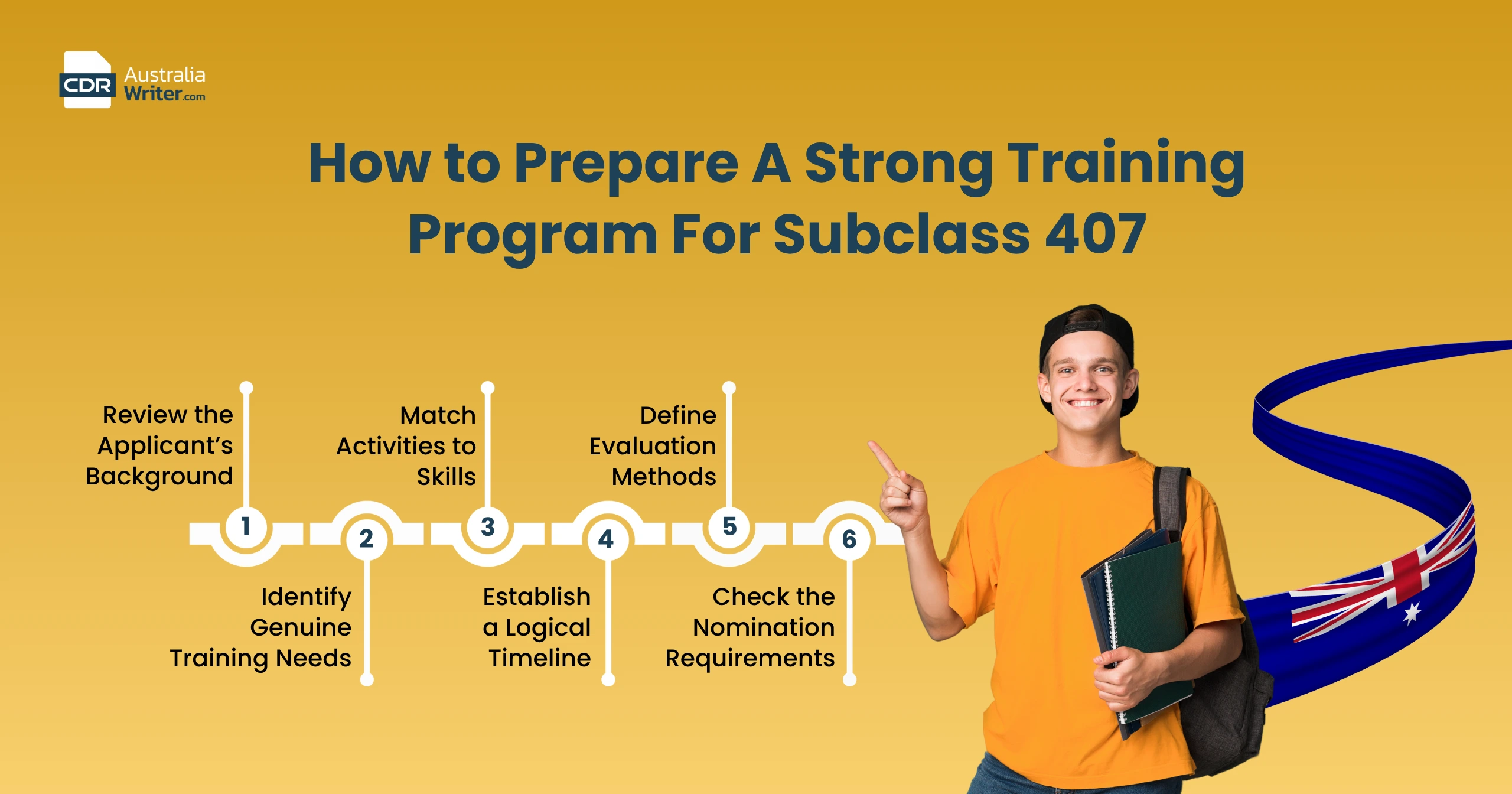
1. Review the Applicant’s Background
Examine the applicants:
- qualifications,
- employment history,
- professional responsibilities and
- relevant technical experience.
This information establishes the trainee’s current competency level.
2. Identify Genuine Training Needs
Determine which skills require further development. The skill should be meaningful and relevant to the occupation or professional development objective.
3. Match Activities to Skills
Every major training activity should possess a purpose. If the objective is to improve project-management capability, then the plan could include supervised project planning, risk assessment, stakeholder communication and progress reporting.
4. Establish a Logical Timeline
Divide the training into different stages where the early activities may focus on orientation and workplace systems, followed by technical development, supervised application and more advanced responsibilities.
5. Define Evaluation Methods
In this step, explain how progress will be assessed. This could involve:
- supervisor reviews,
- competency assessments,
- project evaluations,
- technical presentations or
- documented performance milestones
6. Check the Nomination Requirements
The sponsor needs to confirm whether the proposed program satisfies the applicable nomination criteria for the specific type of occupational training or not. The Department distinguishes between:
- registration-related training,
- skills-enhancement training and
- capacity-building training.
Key Elements of a 407 Visa Training Program
A well-designed407 visa training program should provide a logical progression from the applicant’s existing capabilities to the skills expected to be developed during the placement.
A useful structure can include the following:
Applicant Profile
The structure begins with the trainee’s:
- Full name
- Occupation
- Educational qualifications
- Professional experience
- Current position
- Relevant registrations or licences
- Existing technical and professional skills
This is to establish the applicant’s starting point and provide context for the proposed training.
Training Objectives
In this, clearly state what the trainee is expected to achieve and what their objectives should be specific and how connected it should be with the applicant’s occupation.
Training Activities
List all the activities which are supposed to be undertaken during the program. Depending on the occupation, these activities may involve:
- Supervised practical activities
- Technical workshops
- Workplace observation
- Mentoring sessions
- Project participation
- Professional development sessions
- Technical documentation
- Performance reviews
- Industry-specific training
The above listed activities should match with the stated objectives.
Training Schedule
The program breaks into stages or modules. For example:
Training Stage | Main Focus | Expected Outcome |
Stage 1 | Workplace induction and systems | Understanding of workplace procedures |
Stage 2 | Technical development | Improved occupation-specific skills |
Stage 3 | Supervised practical training | Application of learned techniques |
The exact schedule needs to be tailored with the trainee rather than being copied from another applicant.
Supervision and Assessment
These steps help to identify who will supervise the trainee and explain how progress will be measured. Regular reviews can help them demonstrate that the program has a genuine developmental purpose.
A407 visa training program should make it clear how the sponsor will monitor the trainee and determine whether the intended learning outcomes are being achieved or not.
Documents That Support the Training Plan
A training plan doesn’t stand on its own; it needs to be backed up with evidence that the arrangement is genuine and appropriate for the applicant. Exactly what’s required can vary depending on the nomination type, but generally, you’ll want to have the following ready:
- Passport and identity documents
- Educational qualifications
- Curriculum vitae or resume
- Employment evidence
- Professional registrations or licences
- Sponsor approval documents
- Nomination approval documents
- Training program details
- Evidence of financial capacity
- Health insurance evidence
- English-language evidence
- Professional development documentation, where applicable
Worth noting: for anyone undertaking workplace-based training, the Department has specifically flagged that qualifications, a CV, and where relevant a proof of registration or licensing should be included.
Have Any Question?
CDR Australia Writer specialises in high-quality CDR, RPL and VETASSESS reports for engineers. CDR Australia Writer offer low-cost, customized and reliable services in diverse engineering disciplines.
- +61 485 981 327
- [email protected]
Common Mistakes to Avoid
A poorly prepared 407 training plan can create concerns about whether the proposed activity is genuinely training. Common problems include:
- Using a generic template like a copied program may not reflect the applicant’s qualifications, experience, or actual training needs.
- Describing normal employment duties by simply listing a position description does not demonstrate structured occupational training.
- Unclear learning outcomes can be a drawback. The plan should explain what the applicant will actually gain from the program.
- No clear supervision structure, as the sponsor needs to spell out who’s actually responsible for overseeing the trainee day-to-day, and how their progress will be tracked and reviewed along the way.
- Unrealistic timelines take place when the training period doesn’t match up with the skills being developed: too short, too long, or just oddly paced which might raise questions. The duration should genuinely reflect what’s needed to build those competencies.
Get our free consultation
Do you have a question?
Get our free consultation with specialist and experienced counsellors. Explore our CDR writing packages immediately and receive 100% plagiarism free CDR report
Contact us right now! and Get your CDR report ready for approval.

Do you have a question?
We have mentioned common questions asked by our clients regarding CDR report, ACS RPL report, KA02 report, and skill assessment process.
A 407 Training Plan is a structured workplace-based training program prepared for an applicant seeking the Training visa. It explains the applicant’s existing skills, training needs, proposed activities, learning objectives, supervision arrangements and expected outcomes.
The sponsoring organisation generally prepares the proposed training program in consultation with the nominee. The plan should reflect the actual workplace, available training facilities, supervisor arrangements and the applicant’s individual training needs.
No, the Department doesn’t publish a fixed template. The plan is assessed against nomination criteria and training visa policy, so structure and detail matter more than format.
Programs are typically structured for 6 to 24 months, and the visa itself is granted for a maximum of two years.
Not quite; as of March 2026, the sponsor has to get approved first. Only once that’s sorted can a nomination (with the training plan attached) actually be lodged.
No, a well-prepared strong training program does not guarantee a visa outcome. The applicant needs to meet the standard visa criteria, the sponsor needs to hold up their end on the sponsorship side, and the nomination must include the training plan, which has to stand on its own merits. The Department of Home Affairs weighs all three together, along with whatever supporting evidence is submitted, before making a final call.