

High Demand Skills in Australia: Top Career List for 2026
Understanding high demand skills in Australia is the first move in any serious migration plan, and in 2026 it’s trickier than it looks. Occupation lists have been rebuilt, salary floors have gone up, and a role that was desperately short of workers two years ago may no longer be. Australia’s employment market continues to change as industries expand, technology develops and workforce needs evolve. “Employers need qualified professionals in healthcare, engineering, construction and education to help provide essential services and work on major projects. International professionals may benefit from knowing the high demand skills in Australia to find suitable career opportunities and explore possible migration pathways,
However, high demand skills do not remain the same across every industry or location. Some occupations experience long-term worker shortages, while others face temporary recruitment difficulties or require more specialised experience. If you are an engineer, nurse, tradesperson or IT professional wondering where you stand, then understanding this helps to cover what actually counts, what the latest data says, and what to do next.

How Australia Decides What Counts as “In Demand”
Australia uses two separate yardsticks, and mixing them up is a common mistake. The first form in demand is the Occupation Shortage List from Jobs and Skills Australia. Its 2025 edition put 29% of assessed occupations in shortage, easing from 33% in 2024 and 36% in 2023. The second is the visa occupation list, which decides whether an employer can sponsor you.
A job can appear on one and not appear on the other. Think of shortage data as the “why” and the visa list as the “how”. When people search for high demand skills in Australia, they usually mean both at once, and your strongest position is when the two line up.
Skills in Demand Visa: Streams, Salary and Timing
The Skills in Demand visa, i.e subclass 482 has already replaced the Temporary Skill Shortage visa on 7 December 2024. Two streams matter most:
- Core Skills stream: Your occupation must surely be on the Core Skills Occupation List. For nominations lodged from 1 July 2026, the income floor is A$79,423. The salary must also match market rates for the role, whichever figure is higher.
- Specialist Skills stream: There is no specific occupation list, but the role must be a genuine specialist one. The income floor is A$146,576.
Both streams allow you a stay of up to four years. The thresholds are indexed every year in line with average earnings, and visa application charges for employer-sponsored visas also rose by roughly 25 per cent from 1 July 2026. Nominations lodged before that date aren’t affected by the new thresholds, so timing matters.
The Core Skills Occupation List Explained
Since December 2024, one list has done most of the heavy lifting for employer-sponsored migration. It contains 456 occupations and replaced the old patchwork of MLTSSL, STSOL and ROL lists. Skill level 5 roles, which need only short-term training, are generally not eligible. A refreshed version has been flagged. It follows the 2025 stakeholder consultation, and some occupations may be added or removed. Check the Department of Home Affairs website for the current version before you commit to a plan.
Your first job is simple. Find your ANZSCO code first, then check whether your occupation sits properly on the Core Skills Occupation List. If it does, then you have cleared the first hurdle. If it doesn’t, you still have options, which brings us to the visa itself.

Most High Demand Skills Occupations in Australia
According to Jobs and Skills Australia’s 2026 Occupation Shortage List, 279 occupations were experiencing national shortages, representing approximately 27% of the occupations assessed. While shortages have eased over prior years, demand for workers in some professional and technical occupations remains strong.
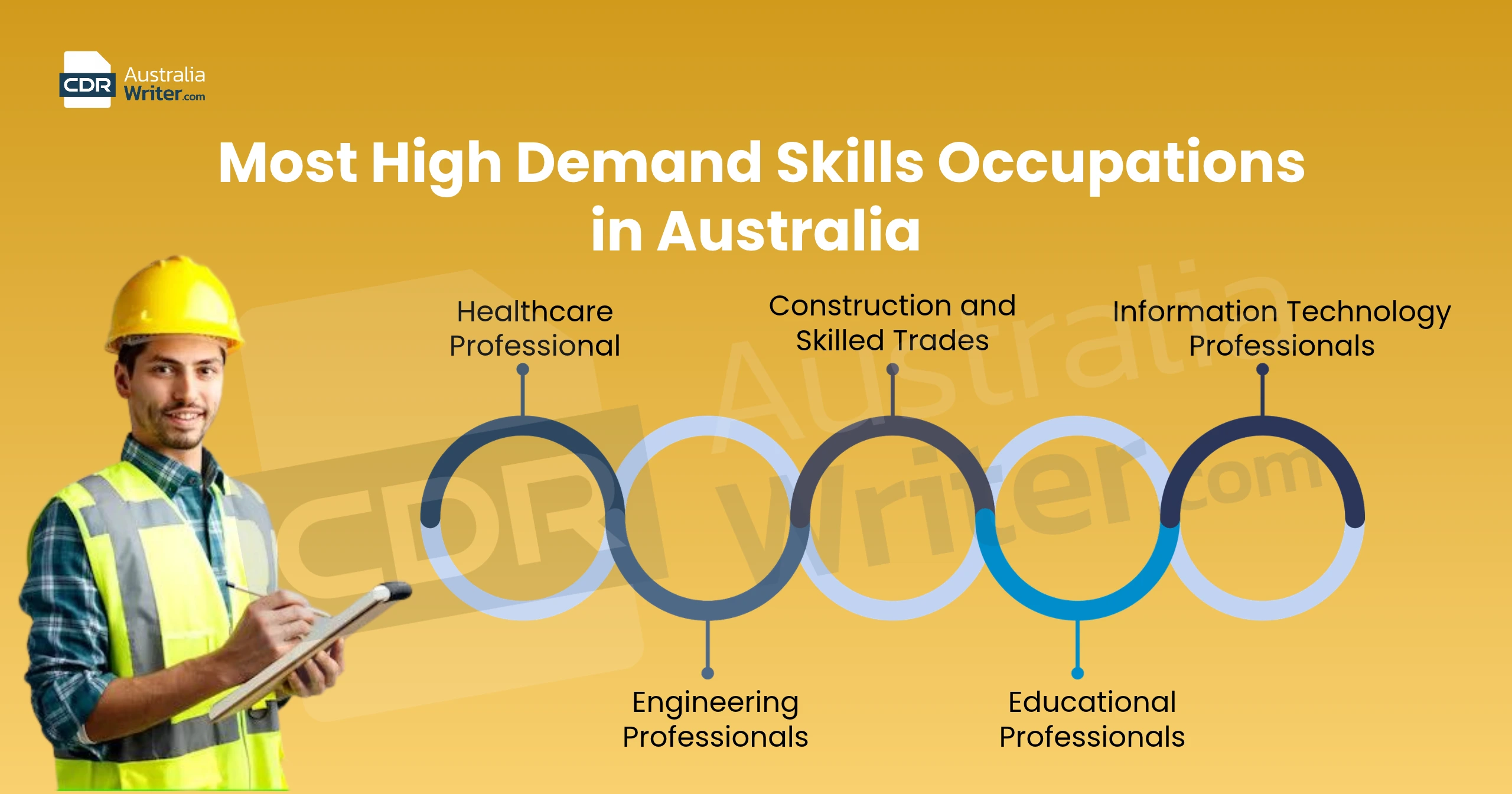
Some occupations and industries to think about include the following:
1. Healthcare professionals:
Healthcare is still considered as a major area of workforce demand. Registered nurses, medical practitioners, physiotherapists and occupational therapists are all key players in Australia’s health system. “The aging population and growing demand for healthcare services continue to pose workforce challenges.
2. Engineering professionals:
Engineers are employed in construction, manufacturing, mining and energy and infrastructure development projects. Depending on your industry, location and experience, opportunities exist in civil, mining, electrical and other engineering specializations.
3. Construction and skilled trades:
Australia has a high demand for skilled construction workers and tradespeople thanks to the country’s infrastructure and housing demands. Electricians, carpenters, metal fitters, plumbers and other technical staff are important to the industry’s growth.
4. Education professionals:
Teachers and early childhood professionals are the bedrock of the Australian education system. In some areas, especially in the country, it is difficult to attract good teachers.
5. Information technology professionals:
Technology is still impacting businesses in a variety of industries. Skills in software development, cybersecurity, data management and cloud are valuable in many work places. However, not all IT occupations are currently readily available, so applicants should research their specific role.
The above examples illustrate the range of opportunities but actual recruitment demand will depend on qualifications, experience, location and employer requirements.
Skills Shortage Occupations in Australia: Industries Facing Workforce Gaps
Experts can use knowledge of skills shortages to identify where their qualifications may be valuable. Jobs and Skills Australia’s shortage analysis looks at whether employers can find suitably qualified and experienced applicants for specific occupations.
The 2026 findings show that shortages are still particularly concentrated among Technicians and Trades Workers and Professionals. Almost half of the occupations assessed in the Technicians and Trades Workers group and 37% of professional occupations were in shortage.
Several areas continue to experience persistent workforce challenges:
- Healthcare: Registered nurses and other qualified health professionals are important to hospitals, aged care services and regional healthcare facilities.
- Engineering and construction: The civil engineering, infrastructure development and construction trades continue to deal with workforce issues.
- Education:There is a need for early childhood teachers and other qualified educators to support education services.
- Electrotechnology and telecommunications:Technical workers specializing in maintenance of electrical systems, communication networks and related infrastructure.
- Mechanical and technical trades:Skilled motor mechanics, metal fitters and other tradespeople support transport, manufacturing and industrial operations.
There is no consistent list of skills shortage occupations in Australia each year. Some occupations move out of shortage as the supply of qualified workers improves. Changes in technology, industry growth or workforce participation may also create new shortages.
Applicants are accordingly advised to rely on the latest shortage information, not old occupation lists or generic web comments.
Future Skills in Demand in Australia: What Should Professionals Learn?
The Australian workforce is changing too as businesses take up new technologies, upgrade infrastructure and respond to environmental issues. Those professionals who continue to build the relevant technical and transferable skills will increase their ability to adapt to these changes.
The following are capabilities worth developing:
Digital and Technology Skills:
Data Analysis, Cyber Security, Software Development, Artificial Intelligence and Cloud Computing are gaining importance across a range of industries.
Engineering and technical capabilities:
Civil, electrical, mechanical and renewable energy engineers could benefit from developing specialized technical knowledge that corresponds to industry needs.
Skills in health care and care:
Clinical knowledge, patient communication, care coordination and specialist health capabilities remain important in health and community services.
Project management:
Useful in construction, engineering, IT and business environments. Useful for planning projects, managing resources, coordinating teams and monitoring progress.
Communication and problem solving:
Employers also want people who can explain technical information, work well with others and respond to workplace challenges.
Economic conditions, technology and industry priorities will also change over time, as will the skills in demand in the future in Australia. Instead of concentrating just on the current popular job titles, professionals should build their skills according to their qualifications and long-term career goals.
Have Any Question?
CDR Australia Writer specialises in high-quality CDR, RPL and VETASSESS reports for engineers. CDR Australia Writer offer low-cost, customized and reliable services in diverse engineering disciplines.
- +61 482 072 465
- [email protected]

Our expert writing team has successfully assisted clients in obtaining approval through professional services for skill assessments and migration needs.
Australian Skilled Migration Requirements: What Should Applicants Know?
Having skills in an occupation that Australian employers need can be helpful but this does not make someone automatically eligible for a skilled migration visa. To be eligible for skilled migration to Australia you need to meet a number of requirements. Your occupation, qualifications, work experience and personal circumstances will determine the correct pathway.
Please note the following before applying:
- Check your nominated occupation:Choose the occupation that best describes the qualifications and responsibilities of your present job.
- Review the skilled occupation list: Occupation data is held by the Department of Home Affairs for a number of visa programs. Eligibility will depend on the visa subclass and the list of occupations that apply.
- Obtain a suitable skills assessment: Many skilled migration programs require applicants to have their qualifications and relevant experience assessed by the relevant assessing authority.
- Meet the English language requirements: If you are applying for a skilled migration visa you will often need to prove that you can speak English. The level required depends on the visa and applicant circumstances.
- Understand the visa criteria: Depending on the pathway you take, age, points, work history, and nomination and sponsorship rules might affect your eligibility.
The Australian skilled migration requirements should always be checked against current government information before preparing an application. A profession experiencing a shortage does not guarantee a visa invitation, skills assessment outcome or permanent residency.
Things to Avoid When Exploring High Demand Skills Careers
If you only look at the overall demand numbers, you could end up with some unrealistic expectations when choosing a career. Remember these common pitfalls:
- If all shortage occupations qualify for migration. Then, check the occupation requirements for the visa you have chosen.
- Choosing an occupation because it appears on a popular list. So, you have to be sure that it matches your qualifications and actual work experience.
- Disregarding skills assessment requirements. Before applying, ensure you know the relevant assessing authority & what evidence they will require.
- Relying too much on old data. Workforce shortage information and occupation lists can change.
- Lost regional opportunities. Some labor shortages are worse outside the major cities.
- Demand guaranties jobs. Employers still consider qualifications, experience, professional registration and suitability.
- Trusting guaranteed migration promises. No occupation or skills assessment provider can guarantee visa approval.
Doing your homework can save you some money and help you make the right decisions.
Your Next Steps Towards an Australian Career
Knowing which jobs are in demand can help you find job opportunities and plan your career development. Start by looking for jobs that match your qualifications, check their required skills assessment requirements and review the current skilled migration criteria.
Demand for skills in Australia can change as industries grow and the needs of the workforce change. When considering an occupation or migration pathway, refer to the latest government information. With the correct planning, real qualifications and relevant experience you are able to set yourself up for future opportunities in the Australian workforce.
Get our free consultation
Do you have a question?
Get our free consultation with specialist and experienced counsellors. Explore our CDR writing packages immediately and receive 100% plagiarism free CDR report
Contact us right now! and Get your CDR report ready for approval.

Do you have a question?
We have mentioned common questions asked by our clients regarding CDR report, ACS RPL report, KA02 report, and skill assessment process.
The workforce shortage continues in several occupations within healthcare, engineering, construction, technical trades, and education. Digital skills also apply to a wide range of industries, but some more than others.
Employment and Skills; Australia’s 2026 findings continue to show a limited supply of Technicians and Trades Workers and Professionals. Specific occupations include health care, construction, engineering, education and technical trades.
No, just being on a shortage occupation list is not an automatic passport to permanent residence. You need to satisfy the occupation, skills assessment, points, nomination and other requirements of the visa you choose.
See the official skilled occupation information published by the Department of Home Affairs. Check the relevant visa subclass, occupation code, assessing authority and any other requirements.
Many engineering migration pathways require a suitable skills assessment from Engineers Australia. The required pathway depends on the applicant’s qualifications, professional background and nominated engineering occupation.
Yes, In some parts of the country there are challenges in recruiting to healthcare, education, engineering, construction and technical occupations. But demand varies by location and this needs to be checked against current labor market information.